Home Farm, Tilgate Forest Lodge, Pease Pottage extends to some 250 acres (100 hectares), and resides on the western side of the Sussex High Weald area.
Our soils are Tunbridge Wells Sands of the Hastings type beds, and are composed of both clay and sands, with iron-stone and sand-stone in the sub soil.
The soil is thin and not naturally fertile and is very acid in its primitive state (my lowest pH reading was 4.5).
Improved grasslands are planted to grass, using both permanent pasture and reseeded leys for grazing and silage production, so we can maximise the production of healthy grass fed beef.
To help with wild flora and fauna, we also maintain an area of 30 hectares (75 acres) of High Weald heathland and mixed woodland, a vital habitat for many rare species of invertebrates, birds, snakes, sand lizards, birds, and plants.
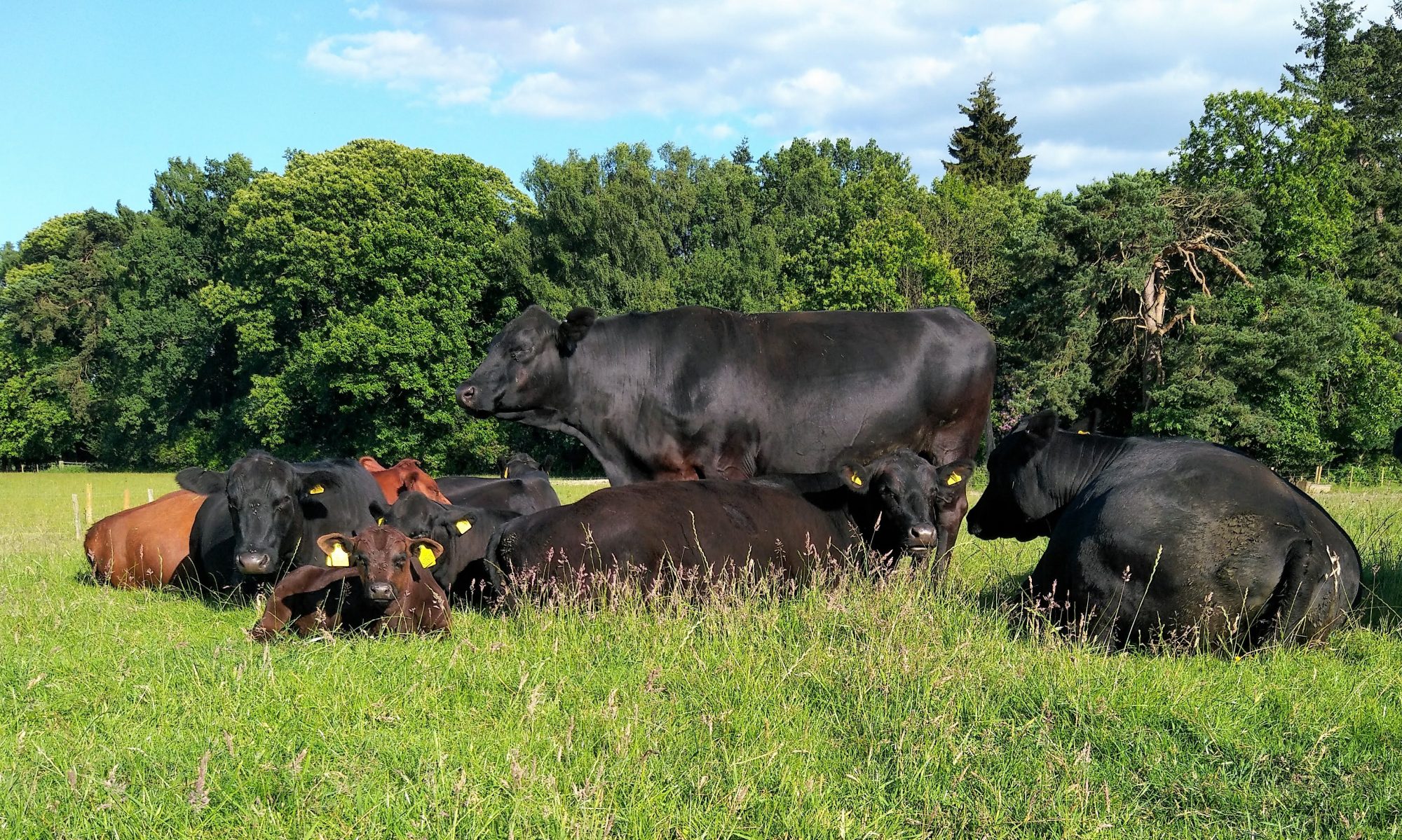
The cattle graze this area and are an important part of the control of the habitat and environment for the benefit of the indigenous species we wish to protect and encourage. Bracken is controlled by “topping”, i.e. mowing, to encourage the gorses, and heathers, and other rare heathland plants.
The other separate area is used for cereal farming, including “red wheat” and winter oats for human consumption.
(Red wheat varieties have been introduced from Canada, and are a winter or spring premium bread wheat with high protein and other qualities needed by bread makers such as Hovis.)